
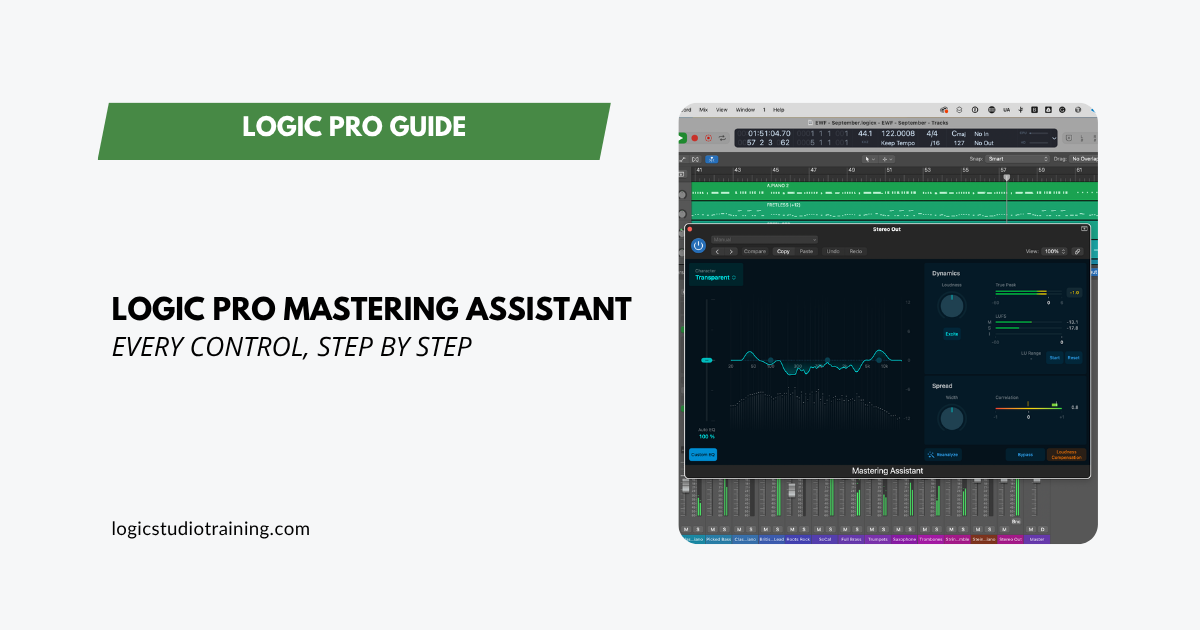
A finished mix can be completely right but still sound unfinished.
The balance feels solid, and the vocal sits where it should, yet the song still sounds quieter and a little less polished than the tracks you love.
That last stretch is mastering, and Logic Pro has a built-in tool for it. Mastering Assistant analyzes your mix, then applies EQ, dynamics, and loudness processing that you can adjust by hand.
This guide walks through every control so you know what Mastering Assistant is doing and when to step in.
What Mastering Does
Mastering is the final processing pass on a finished mix. It balances the overall tone, controls dynamics, and brings the track up to a level that holds its own next to commercial releases.
Raising the volume is part of the job. The bigger goal is consistency, so the master sounds balanced on earbuds and studio monitors alike.
What Mastering Assistant Does
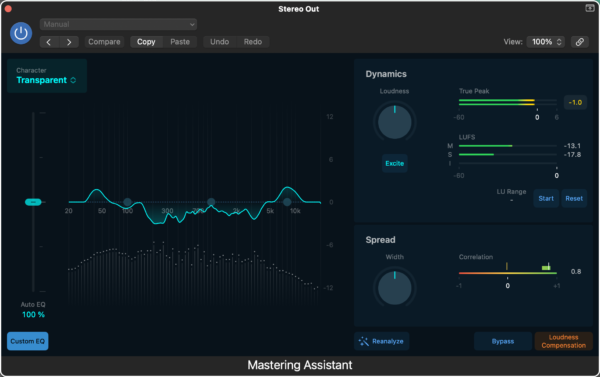
Mastering Assistant listens to your whole project, estimates a corrective EQ curve, and applies compression and limiting to reach a target loudness. You get a starting point in seconds, and every decision it makes stays adjustable.
It also caps the output at −1 dBFS true peak, which meets the delivery requirements of the major streaming platforms. Our guide to LUFS in Logic Pro explains why that number matters.
Prepare Your Mix First
Mastering Assistant polishes a finished mix, so problems like a buried vocal or a muddy low end need fixing before you insert it. Polish on a dented car is still a dented car.
Check two things before you master:
- Headroom. Your Stereo Out should peak somewhere around −6 to −3 dBFS with nothing clipping. If it's hotter, bring levels down at the source. Our gain staging guide covers the method.
- Balance. Every element should already sit where you want it. If you're unsure, run through the five markers of a polished mix.
Remove any limiter or loudness processing you've placed on the Stereo Out. Mastering Assistant makes better decisions when it hears the mix as it is.
Step by Step: Using Mastering Assistant
- Insert it. On Mac, click Mastering in the last Audio Effect slot of the Stereo Out channel strip, or choose Mix > Mastering Assistant. On iPad, tap the Mixer button, then tap Mastering at the bottom of the Audio Effect slot.
- Let it analyze. Mastering Assistant analyzes your project as soon as you insert it and builds its processing from what it hears.
- Choose a character. Pick the preset that suits the song (details below).
- Adjust the EQ. Use the Auto EQ slider to set how much of the suggested correction you hear, or switch to Custom EQ to shape it yourself.
- Set the loudness. Turn the Loudness knob while watching the meters.
- Set the stereo width. Use the Width knob, then check the Correlation meter.
- Reanalyze after mix changes. If you go back and change the mix, click Reanalyze so the processing reflects the new version.
- Bounce. Turn off Loudness Compensation, then bounce your master.
The Controls in Detail
Character
The character presets change the sound of the processing chain. Each one is inspired by a different style of hardware mastering chain.
- Transparent: Based on a modern, tight-sounding compressor and suitable for most genres. On a Mac with Apple silicon, this is where Mastering Assistant starts.
- Clean: Transparent yet punchy. A good fit for EDM, acoustic music, and anything that needs clarity.
- Valve: A tube-style chain with a deep low end and a refined top. Works well for acoustic music and hip-hop.
- Punch: An aggressive sound with a subtle push in the midrange. Built for rock.
On a Mac with Apple silicon (or on iPad), you can switch among all four. On an Intel Mac, the character choices are limited, so if presets are missing from your menu, that's the reason.

Auto EQ and Custom EQ
After analysis, Mastering Assistant shows the corrective EQ curve it's applying, with the Auto EQ slider at 100%. Move the slider to set how much of that correction you hear, which helps when the suggested curve feels too strong for the song.

The Spectrum Analyzer behind the curve shows where the energy in your mix sits, which makes a buildup or a gap easy to spot.
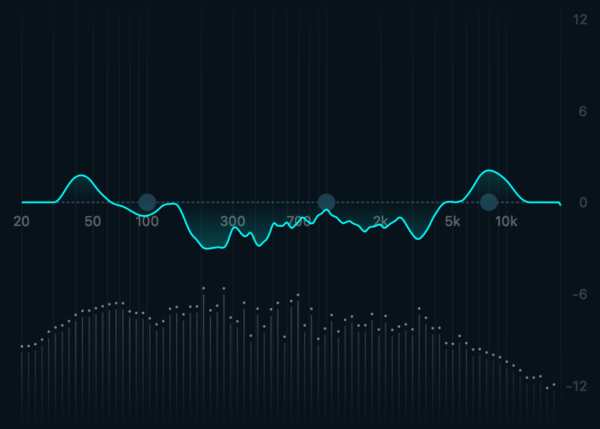
Click Custom EQ when you want to shape the curve yourself.

Reanalyze
Mastering Assistant bases its processing on the mix it analyzed. When you change the mix afterward, that analysis goes stale. Click Reanalyze to update it.

Bypass and Loudness Compensation
Bypass switches to your unprocessed mix so you can compare. Loudness Compensation matches the level of the processed and unprocessed signals during that comparison.
That matters because louder almost always sounds better, which is a great way to win arguments with yourself and a terrible way to judge a master. A level-matched comparison tells you whether the processing improved the sound or only raised the volume.
Turn Loudness Compensation off before you bounce.

Loudness
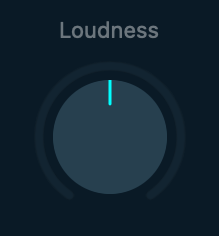
The Loudness knob sets how hard Mastering Assistant drives the signal into its limiter. Watch the LUFS reading as you turn it. Around −14 LUFS integrated is a practical target for streaming, and pushing much louder mostly costs you dynamics, since the platforms turn loud masters down anyway.
Excite
Excite adds subtle harmonic saturation for extra presence and brightness. Try it on a mix that feels a little flat, and skip it on one that's already bright, where it can tip into harshness.

Width and the Correlation Meter
The Width knob widens or narrows the stereo image. A little extra width can open up a dense mix, and too much can make it fall apart in mono.
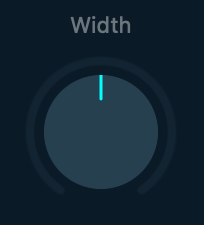
The Correlation meter shows how well your left and right channels agree. Readings toward +1 mean the mix will hold up in mono. Readings that drift toward 0 or below signal phase problems that will thin out the sound on phones and other mono speakers. If the meter dips after you widen, ease the Width knob back.

When to Go Further
Mastering Assistant gives you a release-ready starting point fast, and for demos and most home-studio releases it's often all you need. Our 10-minute mastering guide shows how to fit it into a quick finishing routine.
When you want more control, or a repeatable process for the whole path from mix to master, the Mixing and Mastering Masterclass walks through it step by step in Logic Pro.
Your Logic Pro Coach,
Graham
Free Download
Get the Free Logic Pro Mixing Cheat Sheet
The essential mixing reference for Logic Pro — key settings, signal flow, and mix decisions on one page. Enter your name and email and I'll send it right over.
Your information stays private. No spam, no sharing, ever.