
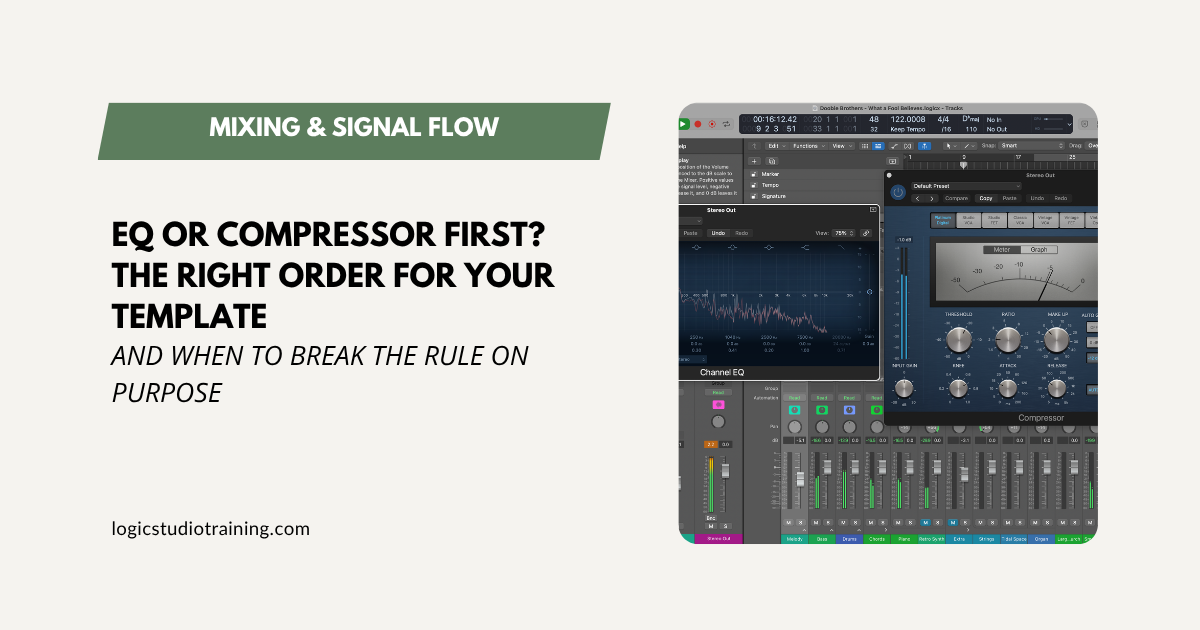
When you're building your default Logic Pro template, one question always comes up:
Should the compressor come before or after the EQ?
Let’s settle it.
The Default Answer: EQ Before Compression
The standard move is to put the EQ before the compressor in the signal chain, and there's a solid reason it became the standard.
Logic Pro doesn't enforce a specific order. Its channel strip displays the compressor's gain reduction meter before the EQ curve, which can be misleading. Click the compressor meter first and it loads a compressor in the first slot, before EQ. So Logic Pro's default layout actually nudges you toward the "wrong" order.
Logic lets you choose your plugin order freely, but that default can lead you to load things backward without realizing it. That's why it's worth being intentional about your signal flow, starting with one of the most important principles.
(If you want to go deeper on getting the most from Logic's stock EQ, see our guide to Logic Pro EQ tricks.)
1. You Feed the Compressor a Cleaner Signal
Compressors respond to volume. If there's low-end rumble, harsh mids, or sharp sibilance in your track, the compressor reacts to it even when you didn't want it to.
By placing an EQ first, you remove those trouble spots before compression. That way the compressor works on the frequencies you actually want to control instead of the junk.
2. You Get More Predictable Results
Using EQ before compression shapes the tone and dynamics in a more deliberate way. That's ideal for a default template because it gives you consistency across sessions, and you don't want surprises every time you add a plugin.
3. It’s a Better Starting Point
Is EQ-before-compression always right? No. But it works in most common use cases:
- Vocals
- Drums
- Guitars
- Bass
- Synths
Starting clean and making creative decisions later beats constantly fixing messy signal chains.
But What If You Want Compression First?
There are some legitimate reasons to flip the order:
- You like the character the compressor adds, and want to shape it with EQ afterward.
- You’re using EQ to brighten or emphasize certain dynamics post-compression.
- You’re in a creative or parallel processing situation.
- You're taming vocals with serial compression.
That's why the golden rule is:
Start with EQ before compression, then break the rule on purpose.
Recommended Default Channel Strip Setup
Here's a solid, flexible signal chain to bake into your Logic Pro template:
Gain > EQ > Compressor > Saturation (optional) > Limiter (optional)
This keeps your dynamics clean and your tone under control, so your mixes stay predictable when you're jumping between projects.
TL;DR
If you're building a default Logic Pro template, put the EQ before the compressor. You get cleaner compression and tighter control over your tone, which adds up to a more professional workflow.
Want to break the rule later for creative effect? Go for it. Just now you're doing it with intention rather than guesswork.
Free Download
Get the Free Logic Pro Mixing Cheat Sheet
The essential mixing reference for Logic Pro — key settings, signal flow, and mix decisions on one page. Enter your name and email and I'll send it right over.
Your information stays private. No spam, no sharing, ever.